
Sleep Cooling: Mattresses, Pads & Temperature Protocols
Core body temperature drop, Eight Sleep vs chiliPAD, optimal bedroom temps, and Huberman's thermal rules
Sleep onset requires a 1–3°F core body temperature drop. Hot sleepers, couples with different preferences, and anyone chasing deep sleep often invest in active cooling — from $60 fan setups to $3,000 smart mattresses. This guide covers the science, equipment tiers, and Matthew Walker's temperature targets. For a head-to-head buy decision, see Eight Sleep vs BedJet vs Chilipad.
Frequency
Nightly
Duration
Ongoing
Level
Beginner
Key Takeaways
- 1Target bedroom ambient temp: 65–68°F (18–20°C) for most adults
- 2Active cooling (water-circulating pads, smart mattresses) beats passive cooling for hot sleepers
- 3Warm bath 1–2 hours before bed paradoxically helps sleep via vasodilation cooldown
- 4Eight Sleep and similar systems cost $2,000–4,000 but solve partner temperature conflicts
Who this is for
- ·Hot sleepers who already keep the room cool but still wake sweaty
- ·Couples with conflicting temperature preferences
- ·People researching cooling science before a big mattress purchase
- ·Budget-first readers who want free/low-cost protocols before hardware
Why Temperature Controls Sleep
Your circadian rhythm drives a predictable evening drop in core body temperature — a signal for melatonin release and sleep onset. Insomnia, menopause, high metabolism, foam mattresses, and shared beds all disrupt this drop.
Matthew Walker: 'Thermal environment is the most underrated sleep variable.' Huberman adds: feet and hands are radiators — warm extremities help core cool. This is why a warm foot bath or socks paradoxically can improve sleep.
The Science
Strong EvidenceDeep sleep and REM: Both stages are temperature-sensitive. Even 1–2°F above optimal reduces slow-wave sleep duration measurable on Oura and EEG.
Hot sleepers: Higher metabolic rate, thyroid issues, perimenopause, and certain medications raise nighttime body heat. Passive cooling (fan, lighter bedding) often fails — active systems remove heat from the mattress surface.
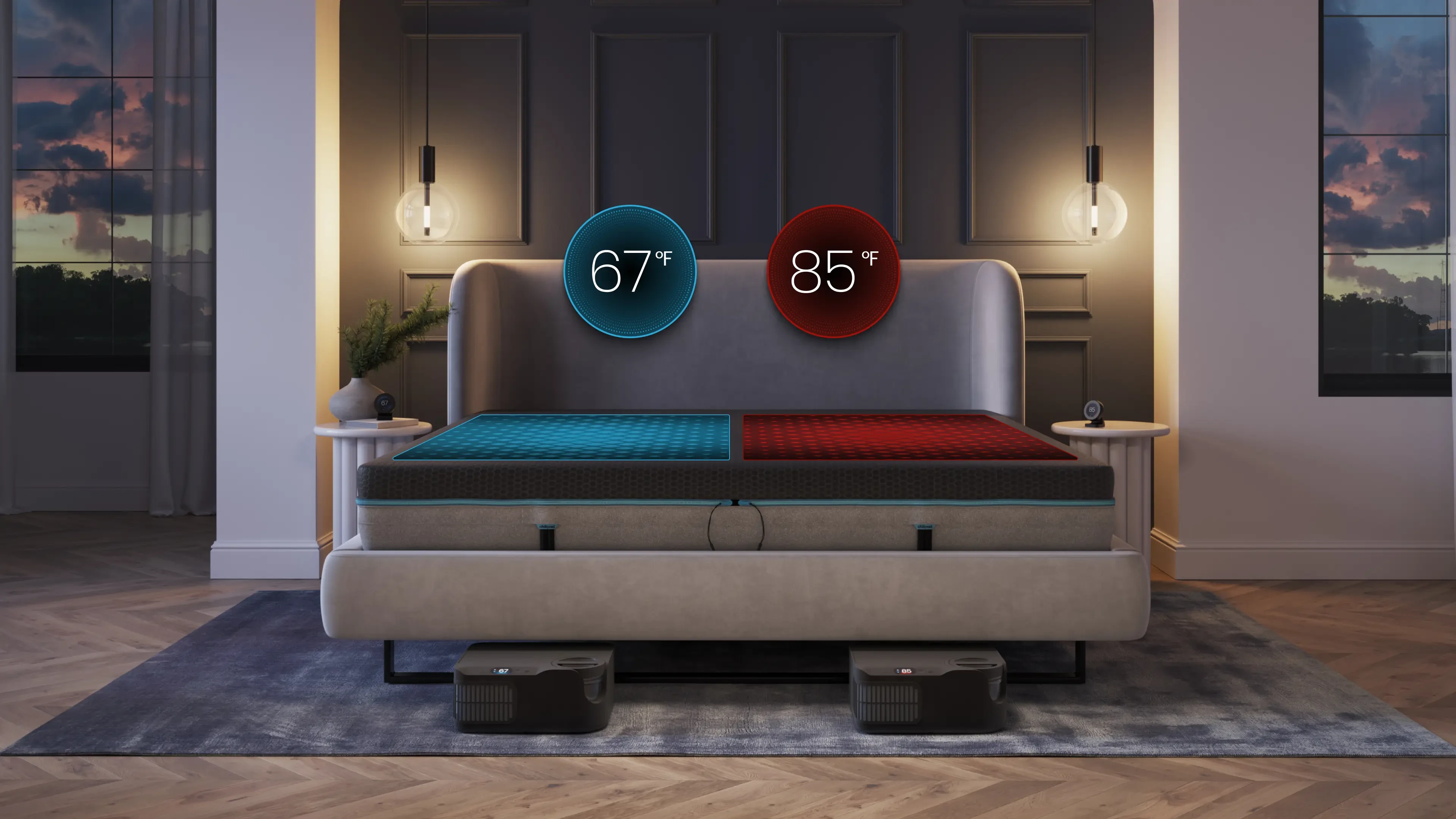
Partner conflict: One partner runs hot, one cold. Dual-zone cooling (Eight Sleep Pod, Sleepme Dock Pro) allows 55°F on one side and 75°F on the other.
Cost-benefit: A $3,000 smart mattress is hard to justify vs $500/year in lost productivity from poor sleep — but start with free interventions first.
- ·65–68°F bedroom is the evidence-based target
- ·Active cooling improves deep sleep in hot sleepers
- ·Warm bath 90 min pre-bed triggers compensatory cooldown
- ·Dual-zone systems solve partner temperature mismatch
Equipment Tiers
Free tier: Fan pointed at mattress, lightweight cotton sheets, feet outside covers, blackout curtains to reduce daytime heat buildup. Bedroom thermostat to 65°F.
Budget ($50–300): Cooling pillow, breathable mattress topper, BedJet or similar air blower systems. Good for mild hot sleeping.
Mid-tier ($300–800): Water-circulating pads (ChiliPad/OOLER, Sleepme Dock Pro). Cools mattress surface to 55–115°F range. Requires reservoir maintenance.
Premium ($2,000–4,000): Eight Sleep Pod, Bryte smart bed. Integrated sensors, HRV tracking, automatic temperature adjustment through sleep stages. Subscription often required.
The Protocol
Strong EvidenceBaseline: Set bedroom to 65–68°F. Use breathable bedding. Stop eating 3 hours before bed (digestion raises core temp).
Warm bath protocol: 104°F bath for 10–15 minutes, 90 minutes before bed. Exit, cool room air drops core temp faster.
Active cooling: Start mattress pad at 65°F, let system adjust through the night. Eight Sleep auto-adjusts per sleep stage; manual systems may need experimentation.
Track: Compare Oura deep sleep % and wake events before and after cooling intervention over 2 weeks.
- ·Bedroom: 65–68°F ambient
- ·Warm bath 90 min before bed
- ·Active cooling: 55–68°F mattress surface
- ·Track deep sleep on wearable for 14 days
What to Expect
Night 1: Active cooling feels shockingly cold initially — most systems warm slightly after you settle. Give it 3–5 nights.
Week 1: Hot sleepers often report first uninterrupted deep sleep blocks. Partners notice less kicking and sheet stealing.
Month 1+: ROI becomes clear on recovery metrics. Skeptics become evangelists when Oura scores jump 5–10 points.
Community Consensus
r/Oura and r/Biohackers rank sleep temperature as tier-1 alongside darkness and consistency. 'Fix your room temp before buying supplements' is common advice.
Eight Sleep owners are vocal advocates but acknowledge subscription fatigue. Budget alternative: Sleepme Dock Pro at ~1/3 the price without smart features.
As an Amazon Associate, Reo Tuku Iho Limited earns from qualifying purchases through Amazon links on this site. Full disclosure
Sources
Key references cited in this guide. Links open the original publication or abstract.
- Effects of thermal environment on sleep and circadian rhythmJ Physiol Anthropol, 2012
- Skin temperature and sleep-onset latency: changes with age and insomniaPhysiol Behav, 2007
- The role of sleep hygiene in promoting public health: A review of empirical evidenceSleep Med Rev, 2015
Continue Reading
Sleep OptimizationBedJet vs Sleepme: Which Sleep Cooling System to Buy
BedJet 3 and Sleepme Dock Pro are the two active sleep-cooling systems you can buy on Amazon. BedJet blows conditioned air under the covers for $399–$549. Sleepme circulates water through a pad on the mattress for $699–$999 and holds a surface temperature. Eight Sleep is the more expensive system, and it is not sold on Amazon. For the science of why temperature matters, start with Sleep Cooling.
Read guide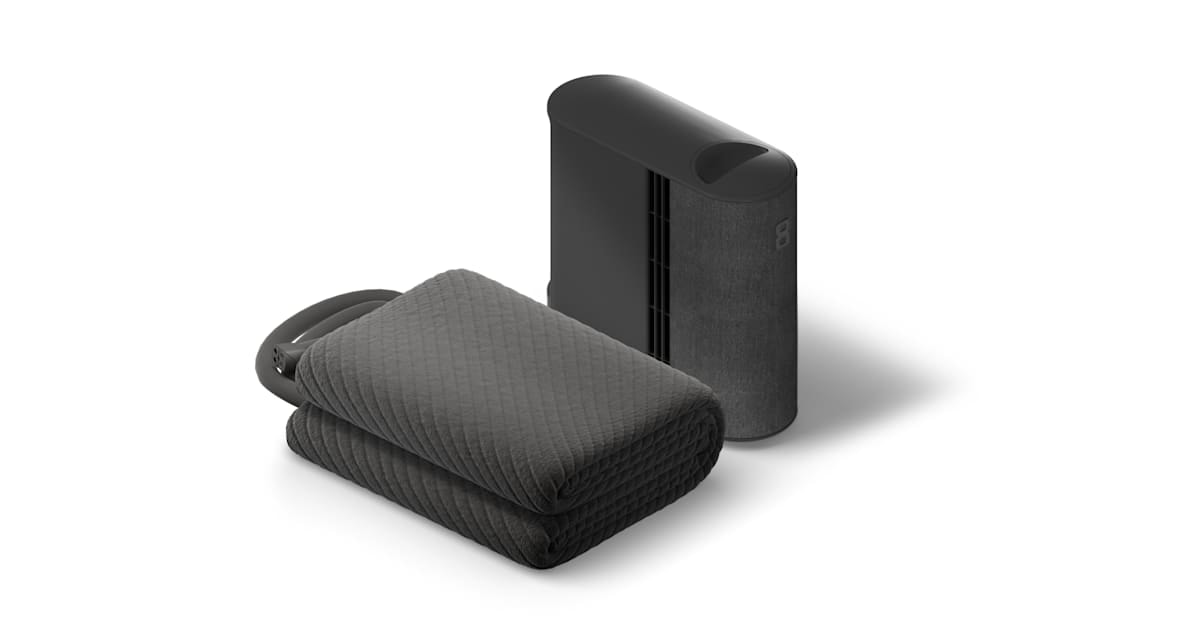 Sleep Optimization
BedJet vs Chilipad vs Eight Sleep: Which to Buy
Sleep temperature regulation is one of the highest-leverage biohacks with genuine evidence behind it, and three systems dominate the category: Eight Sleep Pod, BedJet 3, and Sleepme's Dock Pro (the modern successor to Chilipad, now owned and re-engineered by the same Sleepme team). Eight Sleep uses hydronic water cooling built into a mattress cover with deep sleep-stage automation. BedJet uses forced air instead of water, with no wet components at all. Sleepme's Dock Pro is the direct descendant of the original Chilipad, focused purely on precise temperature control without the smart-home layer. This guide compares the technology, noise, subscriptions, price, and who should buy which. Want the science and budget tiers first? Read Sleep Cooling.
Read guideSleep OptimizationSleep Optimization: The Complete Guide
Sleep is the foundation every biohacker builds on, Huberman calls it the #1 performance enhancer. This guide covers the science of sleep stages, temperature regulation, light protocols, tracking with wearables, and the complete toolkit for deep restorative sleep.
Read guide Sleep Optimization
Circadian Rhythm Optimization: The Complete Guide
Your circadian rhythm governs sleep, hormones, metabolism, and mood. Huberman and Walker's most foundational advice isn't a supplement or gadget, it's light exposure timing. This guide covers the complete circadian protocol: morning sunlight, evening protection, meal timing, and temperature.
Read guide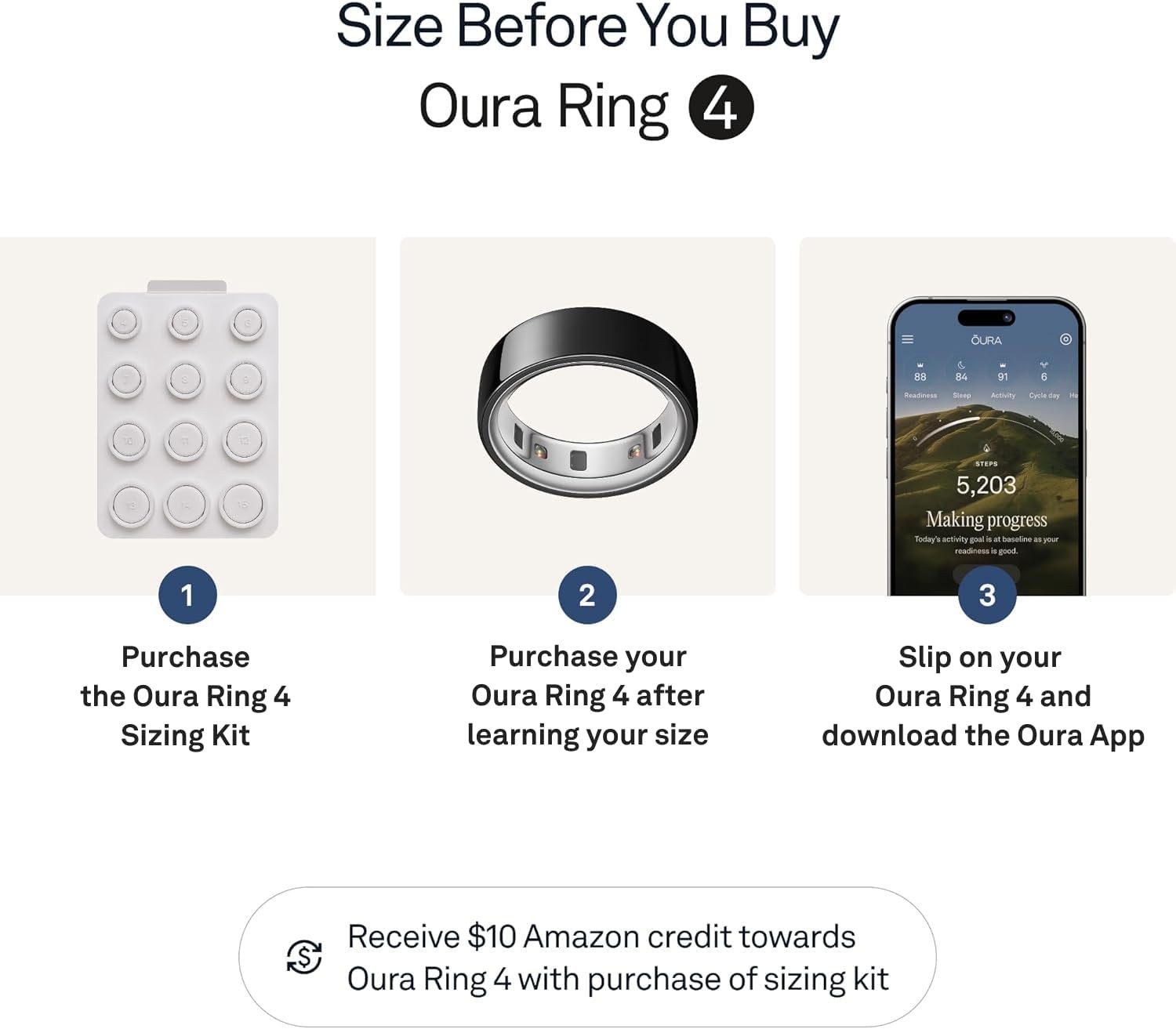 Wearables & Trackers
HRV & Recovery Tracking: The Complete Guide
Heart rate variability (HRV) is the most actionable biometric for biohackers, it tells you when to push hard and when to rest. This guide explains what HRV means, how Oura and WHOOP use it, lifestyle factors that destroy recovery, and how to actually use the data. Ready to buy? See Oura vs WHOOP or Garmin vs Oura vs WHOOP.
Read guide Sleep Optimization
Blue Light Blocking: The Complete Guide
Blue light after dark suppresses melatonin and disrupts circadian timing. Amber-tinted blue blocking glasses are one of the most cost-effective sleep interventions. This guide covers lens types, timing, and why screen night mode isn't enough.
Read guide Sleep Optimization
Apigenin for Sleep: The Complete Guide
Apigenin is a flavonoid from chamomile that modulates GABA receptors for sleep support. Andrew Huberman popularized it as part of his sleep stack alongside magnesium threonate and theanine. This guide covers mechanism, dosing, stacking, and realistic expectations.
Read guideLast updated: 2026-07-25 · For informational purposes only. Not medical advice. Consult a healthcare provider before starting any new health protocol. Health disclaimer.