
Zone 2 Heart Rate Chart: Attia Targets by Age
The age-by-age heart rate chart, Peter Attia’s talk test, and 3–4 hours a week
Peter Attia does not publish a single official zone 2 heart rate chart. He uses a talk test, and in a lab a lactate reading near 2 mmol/L. The chart below is the practical substitute: a Maffetone ceiling of 180 minus age, next to 60–70% of estimated max heart rate. Stay under the ceiling only if you can still speak in full sentences, for 3–4 hours a week.
Frequency
4–5× per week
Duration
45–60 min per session
Level
Beginner
Key Takeaways
- 1Chart: 180 − age is the ceiling; 60–70% of max HR is the band most people can hold a conversation in
- 2Zone 2 = highest intensity where you can still hold a conversation, roughly 60–70% max HR
- 3Target: 3–4 hours per week (Attia's 'centenarian decathlon' foundation)
- 4Walking uphill, cycling, rowing, and swimming all work, consistency beats modality
- 5WHOOP/Oura help but a simple talk test is sufficient
Zone 2 Heart Rate Chart by Age
Use the lower of the two methods, then check it with speech. If you cannot talk in full sentences, you are above zone 2 no matter what the table says. Fit people can sit higher than the Maffetone ceiling and still clear lactate near Attia’s 2 mmol/L lab target — the chart is the starting point when you do not have a lactate meter.
Estimated max heart rate here is 220 minus age. That formula is rough. A chest strap plus the talk test beats either column once you have a few sessions of feedback.
| Age | Maffetone ceiling | 60–70% max HR |
|---|---|---|
| 20 | 160 | 120–140 |
| 30 | 150 | 114–133 |
| 40 | 140 | 108–126 |
| 50 | 130 | 102–119 |
| 60 | 120 | 96–112 |
| 70 | 110 | 90–105 |
- ·Talk test overrides the table: full sentences, no gasping
- ·Attia’s weekly target is still 3–4 hours, not a specific bpm
- ·If you are new to training, ill, or on heart-rate medication, use the talk test and ask your clinician before training from a chart
What Is Zone 2?
Zone 2 is the aerobic training zone where you're working hard enough to stimulate mitochondrial biogenesis and fat oxidation, but not so hard that lactate accumulates. You should be able to speak in full sentences, if you're gasping, you've crossed into Zone 3.
It's the foundation of endurance training and increasingly recognized as the single most important exercise modality for longevity, more important than HIIT for most people, according to Peter Attia.
The Science
Strong EvidenceZone 2 maximally stimulates PGC-1α, the master regulator of mitochondrial biogenesis. More mitochondria = better fat burning, glucose disposal, and cardiovascular health. It's the primary driver of metabolic flexibility.
Lactate clearance: Zone 2 trains your body to clear lactate efficiently at the mitochondrial level. This translates to better performance at all intensities and reduced metabolic disease risk.
Longevity data: higher VO₂ max and cardiorespiratory fitness are among the strongest predictors of all-cause mortality, stronger than most biomarkers. Zone 2 is the most sustainable way to improve VO₂ max for non-athletes.
The Protocol
Peter Attia's target: 3–4 hours of Zone 2 per week, split across 4–5 sessions of 45–60 minutes. Start with 30 minutes if deconditioned and build over 4–6 weeks.
Heart rate method: 180 minus age (Maffetone formula) is a rough Zone 2 ceiling. Or use 60–70% of max HR. Wearables (WHOOP, Oura with chest strap) provide more accurate zone tracking.
Best modalities: incline walking (treadmill 10–15% grade), stationary bike, outdoor cycling, rowing, swimming. Running works for fit individuals but elevates injury risk for beginners.
- ·Talk test: full sentences without gasping = Zone 2
- ·HR target: ~60–70% max HR or 180 − age
- ·Weekly volume: 180–240 minutes total
- ·Track: WHOOP strain, Oura + chest strap, or RPE
- ·Progress: increase duration before intensity
What to Expect
Week 1–2: feels too easy, that's correct. Resist going harder. Building aerobic base requires patience.
Month 1–2: same pace feels easier, HR drops for same effort. Resting HR may decrease 3–5 bpm.
Month 3+: improved energy, better recovery, measurable VO₂ max increase on testing. Metabolic markers (HbA1c, triglycerides) often improve.
Common Mistakes
Going too hard: most people train in Zone 3 ('grey zone'), too hard to build aerobic base, too easy for anaerobic benefit. Use the talk test honestly.
Skipping it for HIIT: HIIT is a supplement to Zone 2, not a replacement. Attia recommends 80%+ of cardio time in Zone 2.
All-or-nothing: 20 minutes twice a week beats zero. Build volume gradually to avoid overuse injury.
Community Consensus
r/fitness and r/longevity align: Zone 2 is the most underrated longevity intervention. Peter Attia's podcast episodes on Zone 2 are the most cited resource. Incline walking is the most accessible entry point.
WHOOP and Oura users track Zone 2 via heart rate, but the talk test remains the gold standard validation.
As an Amazon Associate, Reo Tuku Iho Limited earns from qualifying purchases through Amazon links on this site. Full disclosure
Continue Reading
Diagnostics & TestingVO2 Max: The Complete Guide
VO₂ max — the maximum rate at which you can use oxygen — is one of the best-studied predictors of all-cause mortality. Peter Attia calls it a vital sign. This guide covers lab testing vs wearable estimates, what 'good' looks like by age, and a training mix of Zone 2 plus intervals.
Read guide Wearables & Trackers
Zone 5 & HIIT for Longevity: The Complete Guide
Zone 5 is near-maximal work — the session that actually moves VO₂ max once a Zone 2 base exists. Attia and endurance coaches usually prescribe one hard day a week, not daily HIIT classes. This guide covers 4×4s, shorter intervals, heart-rate vs RPE, and who should wait.
Read guide Wearables & Trackers
Daniel Lieberman & Exercised: The Complete Guide
Exercised (2021) is Lieberman’s evolutionary case that voluntary training is a modern invention. Humans evolved to walk, carry, and rest. This guide extracts the walking-first frame and sends you to Zone 2, Easter, and Starrett instead of a $4,000 treadmill.
Read guide Wearables & Trackers
John Ratey & Spark: The Complete Guide
Spark (2008) is psychiatrist John Ratey’s case that aerobic work changes the brain: attention, mood, and memory. The Naperville school story is the famous chapter. This guide sends you to Zone 2 and Lieberman before another focus capsule. It is not permission to stop psychiatric medication.
Read guide Wearables & Trackers
Herman Pontzer & Burn: The Complete Guide
Burn (2021) is Pontzer’s Hadza-backed argument that 24-hour energy expenditure sits in a narrow band. More training does not linearly raise daily burn. This guide extracts the correction and sends you back to walking, Zone 2, and food — not a watch that ‘earned’ dessert.
Read guide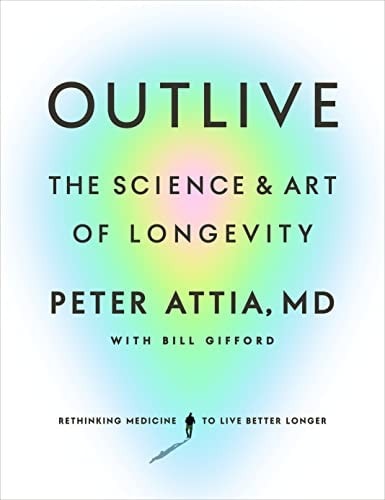 Supplements
Peter Attia & Outlive: The Complete Guide
Peter Attia’s Outlive (2023) is the most useful popular longevity book of the decade: delay the Four Horsemen (atherosclerosis, cancer, neurodegeneration, metabolic disease) with exercise, lipids, sleep, and emotional health — not a supplement haul. This guide translates the book into a sequence you can actually run, and links the hardcover on Amazon.
Read guide Wearables & Trackers
Strength Training for Longevity: The Complete Guide
Cardio gets the longevity headlines, but muscle mass, strength, and power are among the strongest predictors of healthy aging. This guide covers why resistance training belongs next to Zone 2, how much is enough, and a beginner-to-intermediate protocol that still works at 70.
Read guide Wearables & Trackers
Daily Walking for Longevity: The Complete Guide
Walking is the highest-ROI movement habit in longevity medicine: lower all-cause mortality, better glucose control, and cognitive benefits — with zero equipment required. This guide separates step-count hype from structured Zone 2, and how wearables should track both.
Read guide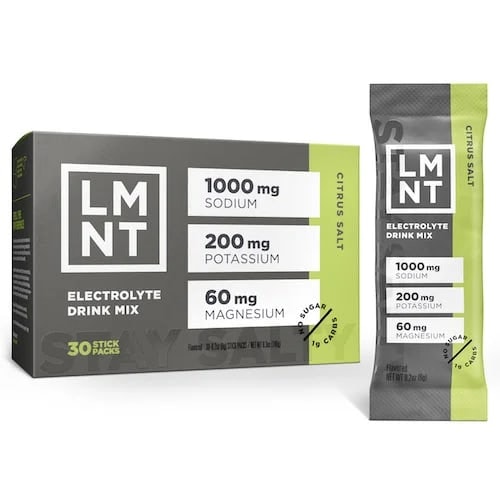 Supplements
Electrolytes & Sodium: The Complete Guide
Electrolytes are the boring infrastructure of biohacking: blood volume, nerve firing, muscle contraction, and how you feel in heat and on low-carb diets. This guide covers sodium, potassium, magnesium synergy, who needs more than RDA sodium, and when LMNT-style packets beat plain water.
Read guideWearables & TrackersHRV & Recovery Tracking: The Complete Guide
Heart rate variability (HRV) is the most actionable biometric for biohackers, it tells you when to push hard and when to rest. This guide explains what HRV means, how Oura and WHOOP use it, lifestyle factors that destroy recovery, and how to actually use the data. Ready to buy? See Oura vs WHOOP or Garmin vs Oura vs WHOOP.
Read guide Diagnostics & Testing
Continuous Glucose Monitoring: The Complete Guide
A continuous glucose monitor (CGM) reveals how YOUR body responds to food in real-time, not population averages. Dave Asprey calls it the most impactful health tool he's used. This guide covers how CGMs work, what you'll learn, and how to use the data to optimize energy, weight, and long-term metabolic health.
Read guide Supplements
Bryan Johnson's Blueprint: The Complete Guide
Bryan Johnson spends ~$2M/year on his 'Don't Die' anti-aging protocol, the most measured human body in history. Blueprint includes 100+ daily supplements, precise sleep/calorie timing, plasma exchange, and relentless biomarker tracking. This guide breaks down what's evidence-based, what's experimental, and what mere mortals can actually adopt.
Read guideWearables & TrackersOura Ring vs WHOOP (2026): Ring vs Band, Cost & Which to Buy
Oura and WHOOP are the two wearables biohackers debate most. Oura excels at passive sleep staging and HRV detail in an unobtrusive ring. WHOOP excels at training load management with its strain/recovery loop. This guide compares accuracy, pricing, use cases, and who should buy which. Considering Garmin too? See Garmin Fenix vs Oura vs WHOOP.
Read guideLast updated: 2026-10-05 · For informational purposes only. Not medical advice. Consult a healthcare provider before starting any new health protocol. Health disclaimer.