
DEXA vs Ultrasound, Skinfold, and Waist Size
Which measurement to trust, how often to repeat it, and why the scale lies on GLP-1s and creatine
DEXA is the clinic scan that separates fat, lean tissue, and bone. Ultrasound and skinfold calipers estimate fat under the skin and are useful between scans. Waist circumference is the free check. A smart scale is only a trend line. Weight alone misleads people on GLP-1s, creatine, or a new lifting program.
Frequency
Weekly to quarterly
Duration
Ongoing
Level
Beginner
Key Takeaways
- 1DEXA splits fat, lean, and bone; ultrasound and skinfolds track the fat layer between scans; waist size is free
- 2Track trend over 4–8 weeks, not daily noise — hydration swings skew BIA by pounds
- 3Waist-to-height ratio is a free mortality marker that complements any device
- 4On GLP-1s, prioritize lean mass retention (protein + lifting) over scale weight
Who this is for
- ·People losing weight who want to confirm fat vs muscle loss
- ·Creatine users confused by sudden scale jumps (water, not fat)
- ·Biohackers pairing CGM with body comp for metabolic health
- ·Anyone replacing BMI with actionable metrics
Why Body Composition Beats BMI
Pick the tool that matches the question. DEXA, once or twice a year, is the reference for fat versus lean mass and bone. Ultrasound and skinfold calipers estimate subcutaneous fat and can be repeated more often if the same person measures you the same way. Waist circumference at the navel, or waist-to-height under 0.5, is the check that needs no appointment. A bathroom scale cannot tell those apart.
BMI conflates muscle and fat. Two people at 'overweight' BMI can have opposite health profiles — one lifter, one sedentary with visceral fat.
Longevity medicine cares about muscle mass, visceral adiposity, and bone density. Those require better tools than a bathroom scale.
The Science
Strong EvidenceDEXA (dual-energy X-ray absorptiometry): low-dose X-ray separates fat, lean tissue, and bone. Reference standard in research; typically 1–2× per year in clinics.
Bioimpedance (BIA): smart scales send current through feet to estimate body fat. Convenient but sensitive to hydration, meal timing, and calluses. Good for trends, bad for absolute truth.
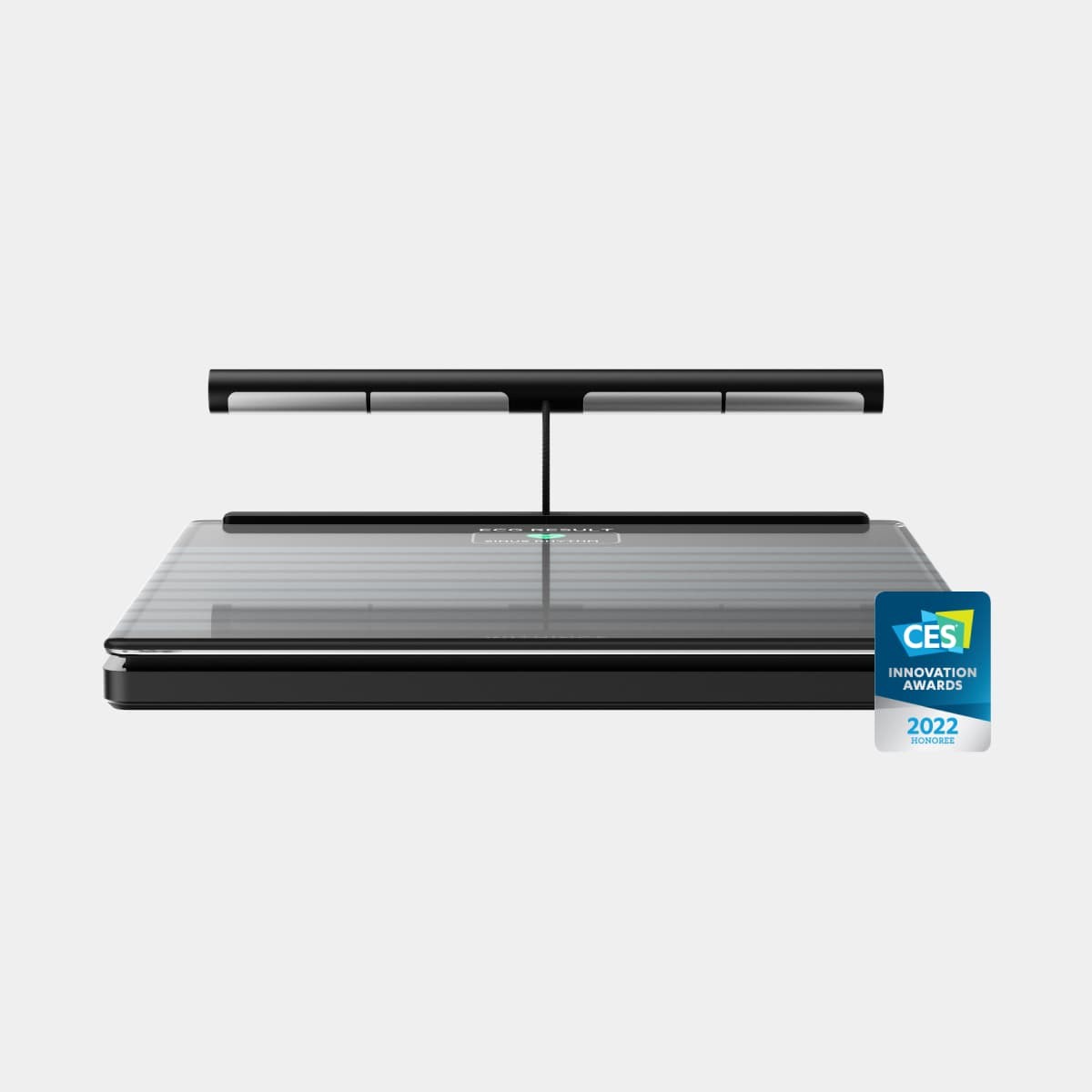
Withings Body Scan and similar devices add segmental BIA and sometimes vascular metrics — still estimates, but richer dashboards for home tracking.
Ultrasound and skinfolds: both estimate the fat layer under the skin. They are cheaper and easier to repeat than DEXA, and they miss visceral fat and bone. Use them for trend, and use DEXA when you need the full split.
Waist circumference and waist-to-height ratio (<0.5 target) correlate with cardiometabolic risk independent of weight.
- ·Strong: central adiposity predicts cardiometabolic risk
- ·Strong: sarcopenia (low muscle) predicts frailty and mortality
- ·Moderate: home BIA for relative trends when protocol is consistent
- ·Weak: daily body-fat percentage precision from consumer scales
The Protocol
Moderate EvidenceHome BIA: same time, same hydration rule (e.g. morning, post-bathroom, pre-food). Weekly average, not daily panic.
DEXA: baseline and every 6–12 months if accessible — more often during aggressive cuts or GLP-1 titration with a coach.
Tape measure: waist at navel weekly; progress photos monthly.
Pair with labs: ApoB, fasting glucose, HbA1c — see blood-panel-testing and apob-lipids guides.
- ·Weekly smart-scale average under consistent conditions
- ·DEXA 1–2× yearly if available
- ·Waist-to-height ratio as free check
- ·Protein + lifting when scale drops on GLP-1s
What to Expect
Creatine start: +2–4 lb scale weight, lean mass estimate may rise — not fat gain.
GLP-1 phase: scale drops fast; DEXA or strength tracking confirms whether muscle is going with fat.
Risks & Cost
Moderate EvidenceOrthorexia and scale obsession are real — if tracking harms mental health, reduce frequency.
DEXA runs roughly $75–150 per scan in many US markets. Withings Body Scan–class scales ~$300–400 on Amazon.
Community Consensus
r/Biohackers loves DEXA day; r/loseit lives on scales. Consensus for longevity crowd: DEXA occasionally, tape measure always, scale as one input not identity.
As an Amazon Associate, Reo Tuku Iho Limited earns from qualifying purchases through Amazon links on this site. Full disclosure
Sources
Key references cited in this guide. Links open the original publication or abstract.
Continue Reading
 Diagnostics & Testing
Blood Panel Testing: The Complete Guide
Annual bloodwork is the foundation of data-driven biohacking. Peter Attia's framework prioritizes ApoB, insulin, HbA1c, and inflammatory markers over standard lipid panels. This guide covers what to test, how often, where to order, and how to interpret results.
Read guide Diagnostics & Testing
ApoB & Lipids for Longevity: The Complete Guide
Cardiovascular disease remains a top killer; lipid panels are the cheapest longevity blood test most people skip interpreting correctly. This guide explains ApoB vs LDL-C, Lp(a), and lifestyle plus supplement levers — not statin prescribing.
Read guide Peptides
GLP-1 Agonists: The Complete Guide
GLP-1 receptor agonists (semaglutide, liraglutide) and dual agonists (tirzepatide) moved from diabetes clinics into mainstream weight and metabolic culture. For biohackers, the live questions are muscle loss, rebound weight, nutrient quality, and whether a peptide drug belongs next to Zone 2 and protein. This is a map of the evidence — not a shortcut to a vial.
Read guide Supplements
Protein for Longevity: The Complete Guide
Protein is the most under-discussed longevity lever after sleep and training. Too little accelerates sarcopenia; the right amount supports muscle, bone, and metabolic health into older decades. This guide covers g/kg targets, meal distribution, and how protein needs change on GLP-1s and during fat loss.
Read guide Wearables & Trackers
Strength Training for Longevity: The Complete Guide
Cardio gets the longevity headlines, but muscle mass, strength, and power are among the strongest predictors of healthy aging. This guide covers why resistance training belongs next to Zone 2, how much is enough, and a beginner-to-intermediate protocol that still works at 70.
Read guideDiagnostics & TestingContinuous Glucose Monitoring: The Complete Guide
A continuous glucose monitor (CGM) reveals how YOUR body responds to food in real-time, not population averages. Dave Asprey calls it the most impactful health tool he's used. This guide covers how CGMs work, what you'll learn, and how to use the data to optimize energy, weight, and long-term metabolic health.
Read guideLast updated: 2026-10-05 · For informational purposes only. Not medical advice. Consult a healthcare provider before starting any new health protocol. Health disclaimer.