
Benfotiamine Dose: 300 mg vs 600 mg in the Neuropathy Trial
Benfotiamine guide: fat-soluble vitamin B1 at 300 or 600 mg in a diabetic neuropathy trial, and why one 300 mg capsule is the lower dose.
Fat-soluble vitamin B1, the diabetic-neuropathy trial, and the blends to skip
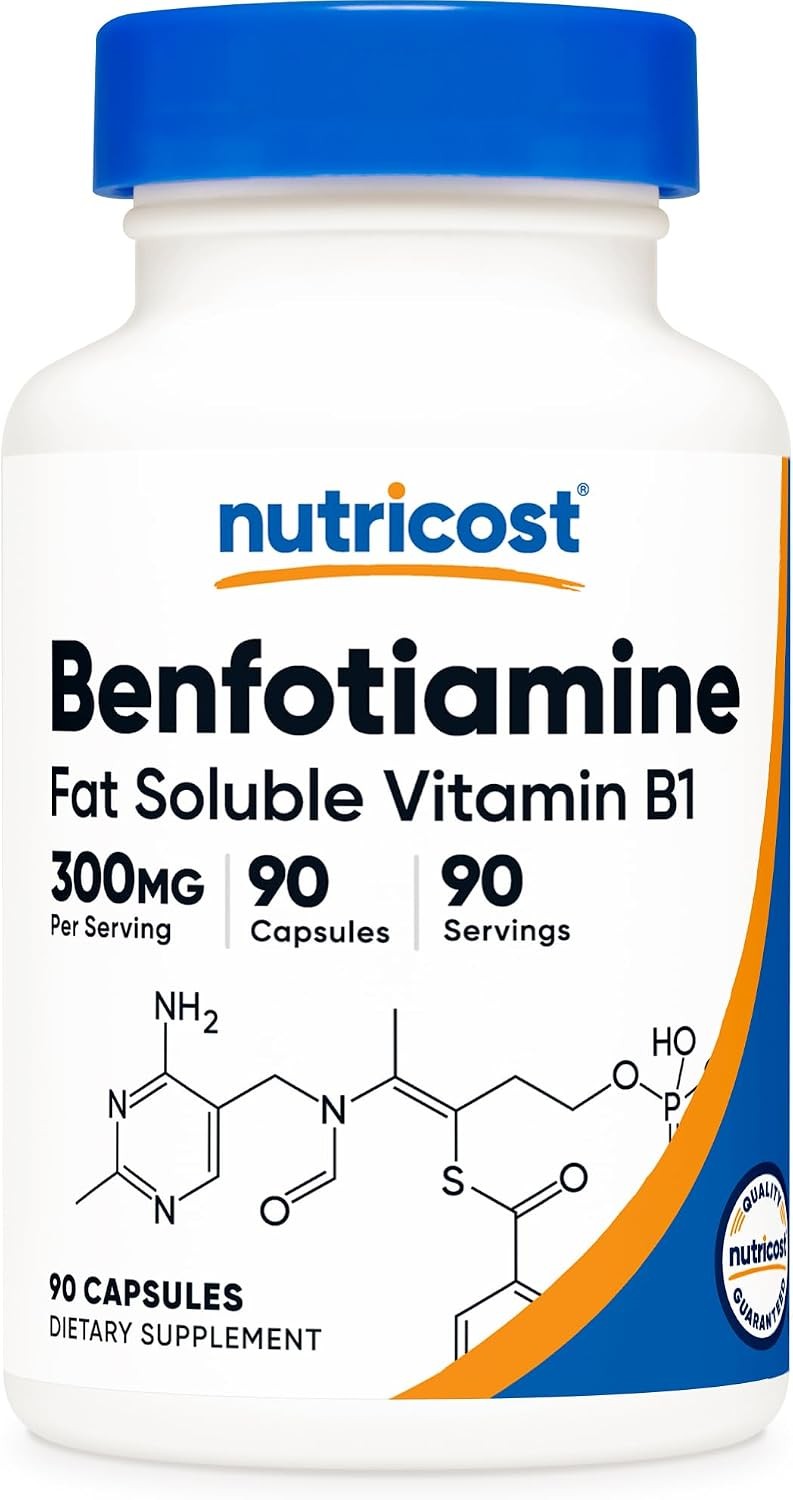
Benfotiamine is a fat-soluble form of thiamine (vitamin B1). The main neuropathy trial compared 300 mg and 600 mg a day with placebo for 6 weeks in diabetic polyneuropathy. Symptom scores looked better at the higher dose, and the primary result was borderline once everyone randomized was counted. Nutricost is 300 mg in one capsule. Two capsules match the higher arm. A B-vitamin blend that hides the milligrams does not.
Health Disclaimer
This content is for general informational and educational purposes only. It is not medical advice, diagnosis, or treatment. Consult a qualified healthcare provider before starting any supplement, peptide, or health protocol. Read our full health disclaimer.
Frequency
1 capsule = 300 mg; 2 capsules = 600 mg
Duration
The neuropathy trial lasted 6 weeks
Level
Beginner
Key Takeaways
- 1BENDIP used 300 mg or 600 mg a day for 6 weeks
- 2The higher dose looked better; the full-analysis primary result was not clear-cut
- 3Nutricost is 300 mg per capsule, so one capsule is the lower arm
- 4This is not a diabetes treatment and it does not replace glucose care
Who this is for
- ·Shoppers who want a milligram that maps to the trial
- ·Anyone about to buy an 8-in-1 nerve blend
- ·Readers who already have a clinician for diabetes or neuropathy
What BENDIP Measured
Emerging ResearchStracke and colleagues randomized people with symmetrical diabetic polyneuropathy to benfotiamine 600 mg a day, 300 mg a day, or placebo. After 6 weeks, the neuropathy symptom score differed across groups in the per-protocol analysis. In the intention-to-treat analysis the same primary result was just short of the usual significance line (p = 0.055). The total symptom score was not clearly different at 6 weeks. Pain is the symptom that looked most responsive, and the 600 mg arm looked better than 300 mg. Later commentary has stayed cautious. This is an adjunct signal in diabetic nerve symptoms, not a cure, and not evidence that a healthy person needs it for longevity.
Ordinary thiamine HCl is the cheap water-soluble vitamin. Benfotiamine is used because it raises thiamine-related metabolites more readily. That pharmacokinetic point is not the same as a better clinical outcome. If the goal is “am I B1 deficient,” that is a diet and a clinician, not a fat-soluble upgrade by default.
- ·Trial doses: 300 mg and 600 mg daily
- ·Population: diabetic polyneuropathy, not healthy aging
- ·Higher dose tracked with a larger symptom change
- ·Do not change diabetes medication because of a B1 bottle
One Capsule, and What It Is Not
Moderate EvidenceNutricost Benfotiamine is 300 mg per capsule, 90 capsules, about $16. The label serving is one capsule. That is the lower BENDIP dose. Two capsules are 600 mg, which is the arm that looked stronger, and still only matches a 6-week trial in people who already had diabetic nerve symptoms.
Life Extension’s benfotiamine is 100 mg per capsule and the brand directions are four capsules a day (400 mg), plus a little thiamine HCl. That can land near the trial range if you actually take four. A bottle that says 100 mg and gets taken as one capsule does not. Dr. Berg and similar “nerve support” blends add magnesium, ALA, and other B vitamins. You cannot tell which ingredient did what, and you often cannot see a clean 300 or 600 mg.
As an Amazon Associate, Reo Tuku Iho Limited earns from qualifying purchases through Amazon links on this site. Full disclosure
For educational purposes only. Not medical advice. Read our health disclaimer.
Sources
Key references cited in this guide. Links open the original publication or abstract.
- Benfotiamine in diabetic polyneuropathy (BENDIP): results of a randomised, double blind, placebo-controlled clinical studyExp Clin Endocrinol Diabetes, 2008
Continue Reading
 Supplements
Vitamin B12 Deficiency: Methylcobalamin, Vegans, Metformin, and Tests
Vitamin B12 is required for myelin, DNA synthesis, and homocysteine handling. Deficiency is a neuropathy and anemia problem — not a focus hack. This guide covers who needs a lozenge, what to test, and why NOW methyl 1,000 mcg is enough for most plant-based eaters.
Read guide Supplements
Methylfolate (5-MTHF) Guide: Daily Dose, MTHFR & Who Should Avoid It
Methylfolate (5-MTHF) is the biologically active form of folate (vitamin B9). How much L-methylfolate should you take daily, when should you take it, and who should not take methylfolate? Typical maintenance dosing is 400–1,000 mcg taken in the morning with breakfast alongside active Vitamin B12 ([NOW Methyl B-12](/equipment/now-foods-methyl-b12)). Never take high-dose folate with an uncorrected B12 deficiency, seizure medications without physician oversight, or methotrexate.
Read guide Supplements
Alpha-Lipoic Acid Dose: 600 mg, R-ALA vs Racemic, and Glucose
ALA is a mitochondrial cofactor that can recycle vitamins C and E and shows up in diabetic neuropathy and glucose conversations. Longevity evidence in healthy people is thin. This guide covers the 600 mg NOW bottle and the hypoglycemia warning if you already take diabetes drugs.
Read guide Supplements
Best Magnesium for Sleep: Bisglycinate vs Glycinate vs L-Threonate
Magnesium is the first sleep-stack purchase that usually deserves to stay. Glycinate (bisglycinate) is the default for evenings; citrate if you also want a stool softener; threonate if you are paying extra for a cognition story. This buying guide maps forms to Amazon SKUs.
Read guide Wearables & Trackers
How to Blunt a Glucose Spike: Walks, Food Order, and Vinegar
Glucose spikes after meals drive inflammation and metabolic stress — even in non-diabetics. CGM culture made this visible. This guide covers behavioral hacks (walk, fiber first, vinegar), when berberine fits, and how to use a monitor without ruining your relationship with food.
Read guideLast updated: 2026-11-23 · For informational purposes only. Not medical advice. Consult a healthcare provider before starting any new health protocol. Health disclaimer.