
Lactoferrin 300 mg: Immune, Gut, and Iron — Not a Longevity Drug
Lactoferrin guide: 300 mg bovine whey protein, small immune and low-hemoglobin trials, and why milk allergy and prescribed iron come first.
A milk protein with small human trials, a clear milligram, and a dairy allergy
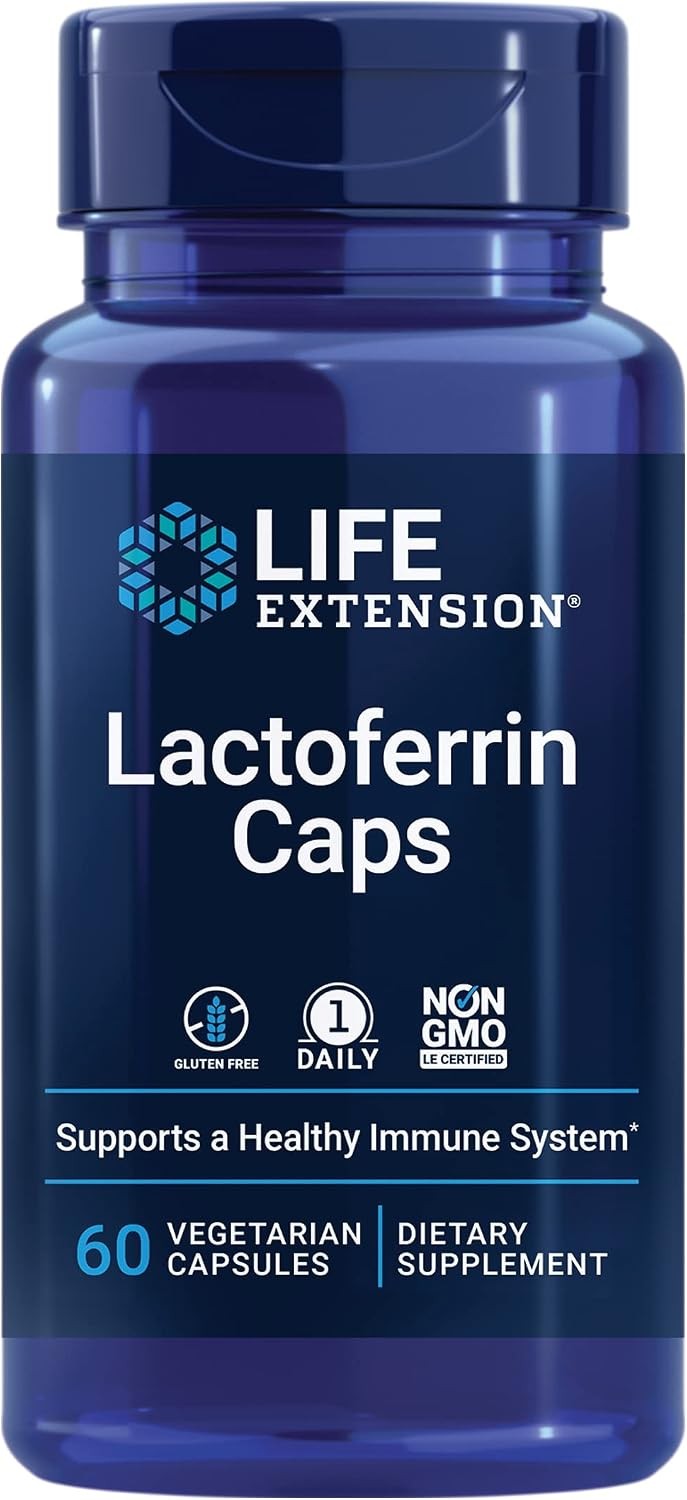
Lactoferrin is an iron-binding protein from milk. Human trials are small and usually use about 200–300 mg of bovine lactoferrin for immune or gut endpoints over weeks, with mixed results. Life Extension’s capsule is 300 mg, one a day. Search interest jumped in 2026. The evidence did not become an aging intervention. It is a dairy protein. People with a milk allergy, iron overload, or an iron prescription should not add it quietly.
Health Disclaimer
This content is for general informational and educational purposes only. It is not medical advice, diagnosis, or treatment. Consult a qualified healthcare provider before starting any supplement, peptide, or health protocol. Read our full health disclaimer.
Frequency
Label: 1 capsule (300 mg) daily
Duration
Trials are usually weeks, not years
Level
Beginner
Key Takeaways
- 1A labeled 300 mg capsule matches the ballpark of the small trials
- 2Endpoints are immune and gut, not lifespan
- 3It binds iron; that is a reason to ask a clinician if iron is already a problem
- 4Milk allergy is a hard skip
Who this is for
- ·Readers who want one ingredient and a milligram
- ·Anyone treating a whey or colostrum blend as lactoferrin
- ·People who need the dairy and iron caveats before checkout
What the Protein Is
Emerging ResearchLactoferrin sits in milk and other secretions and binds iron. That property is why it shows up in immune, gut, and iron research. Small trials of bovine lactoferrin, often around 100–300 mg a day, have looked at respiratory infections and gut comfort, with mixed results in healthy people. A 2024 meta-analysis in people who already had low hemoglobin found oral lactoferrin raised hemoglobin compared with ferrous sulfate. The trials were heterogeneous and many were at risk of bias. That is not a DIY anemia protocol, and it is not an aging result.
Brand pages sometimes cite a tear-film study. That is an eye endpoint in a specific group, not a reason to buy it for longevity. It does not replace sleep, protein, vitamin D if you are deficient, or vaccines.
- ·Bovine whey lactoferrin, typically 200–300 mg in studies
- ·Iron-binding is the mechanism people mean
- ·Not an antibiotic and not an iron pill
- ·Colostrum powders are a different, broader product
The 300 mg Capsule
Moderate EvidenceLife Extension Lactoferrin is 300 mg from bovine whey, 60 capsules, one a day, about $33 in late November 2026 (list price higher). The capsule is vegetarian. The lactoferrin is not: it comes from milk. Jarrow’s 250 mg bottle is in the same range and is often a shorter count for a similar daily price.
Skip colostrum and “immune mushroom” blends if the question you typed was lactoferrin. You want 250–300 mg of lactoferrin on the supplement facts, not a proprietary milligram that includes it.
Iron and Dairy
Moderate EvidenceA milk protein allergy is a reason to leave it on the shelf. Lactose intolerance is a separate issue; many capsules are low in lactose, but the source is still whey. The low-hemoglobin trials are a reason to talk to a clinician, not a reason to drop prescribed iron or to start this because a longevity ad mentioned iron. People with hemochromatosis or high ferritin need that same conversation before they add an iron-binding protein. Pregnancy is not a self-experiment.
As an Amazon Associate, Reo Tuku Iho Limited earns from qualifying purchases through Amazon links on this site. Full disclosure
For educational purposes only. Not medical advice. Read our health disclaimer.
Sources
Key references cited in this guide. Links open the original publication or abstract.
Continue Reading
 Supplements
Vitamin D Dose: Test 25(OH)D, Target 40–60 ng/mL, and Pair with K2
Vitamin D is technically a hormone, involved in immunity, bone health, mood, and 200+ gene expressions. Deficiency affects ~40% of adults in temperate climates. This guide covers testing, dosing, K2 pairing, and sun vs supplement tradeoffs.
Read guide Supplements
Probiotics: Strains, Evidence, and What Actually Works
The probiotic market is a $60B mess of underdosed, poorly studied products. But specific strains with clinical trial data can meaningfully support gut health, immune function, and even mood. This guide cuts through marketing to cover evidence-backed strains, dosing in CFUs, spore vs conventional probiotics, and when testing beats guessing.
Read guideDiagnostics & TestingHow to Support Your Gut Microbiome: Fiber, Prebiotics, and Seed DS-01
Your gut microbiome, 100 trillion bacteria, influences immunity, mood, metabolism, and inflammation. Bryan Johnson tests his monthly. This guide covers microbiome testing, evidence-based interventions, and what actually moves the needle vs marketing.
Read guideSupplementsBest Vitamin D3: 5,000 IU, K2, and a 40–60 ng/mL Lab Target
Vitamin D shopping is easy once you have a 25(OH)D number. D3 (cholecalciferol) beats D2. 5,000 IU is a repletion-style softgel, not a forever default. This buying guide picks NOW D3 for cheap D-only and Thorne D3/K2 when you want both in one capsule.
Read guide Supplements
How Much Protein for Longevity? 1.6–2.2 g/kg and Leucine
Protein is the most under-discussed longevity lever after sleep and training. Too little accelerates sarcopenia; the right amount supports muscle, bone, and metabolic health into older decades. This guide covers g/kg targets, meal distribution, and how protein needs change on GLP-1s and during fat loss.
Read guideLast updated: 2026-11-23 · For informational purposes only. Not medical advice. Consult a healthcare provider before starting any new health protocol. Health disclaimer.